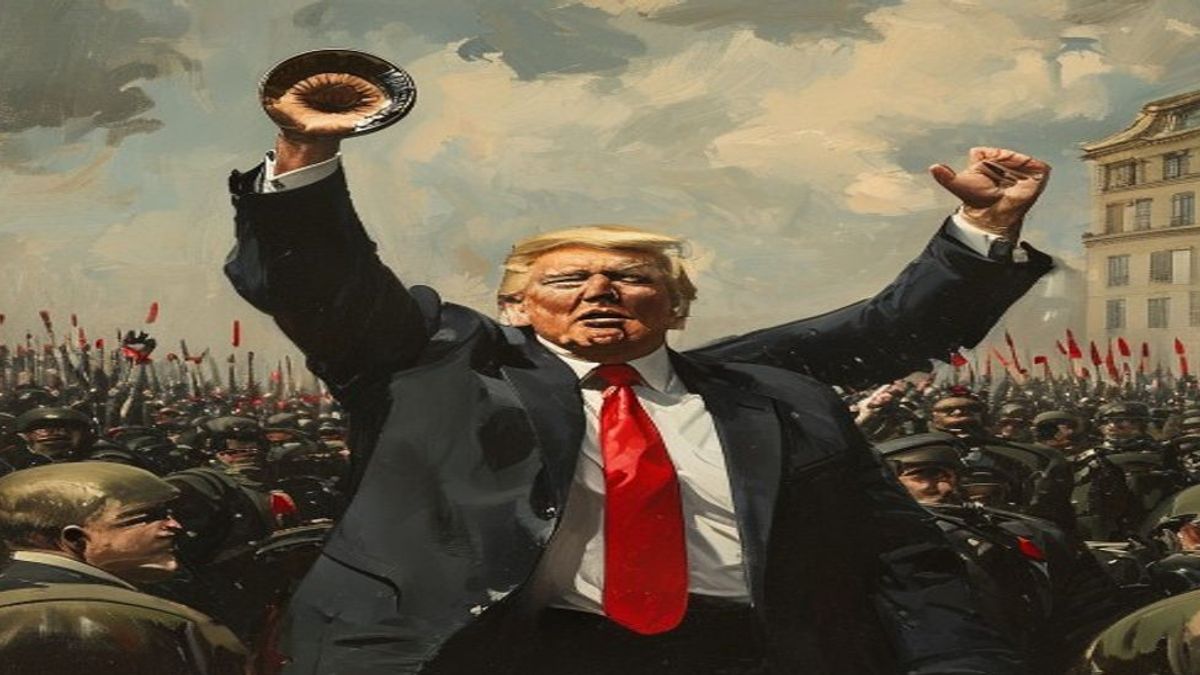
“We’re bringing back 5,000 troops to Poland,” the former president tweeted, waving a new claim as if it were a trump card. The message exploded on Twitter, set against a backdrop of thwarted promises that had already disoriented Washington’s European partners. The U.S. had cut troops out of Germany last year, citing shrinking threats and budget concerns, only to hint at a return in the same brief window. That shuffle rattled the old alliances that had kept the Warsaw Pact ghosts at bay for decades.
When Washington first announced troop reductions in 2022, allies in Brussels and Berlin tried to rationalize the shift. “We must focus on modern threats,” officials said, a line that fell flat when 5,000 new boots were counted in Poland’s perimeter. Confidence in U.S. commitment wavered, while diplomats in Warsaw demanded concrete evidence that the drawdown would not flex NATO’s defensive posture. Communications crackled across channels, and on the ground, generals scrambled to anticipate this last‑minute tug‑of‑war.
The move ties back to a broader strategy of re‑balancing the U.S. military footprint. Trump’s team had positioned the reduction as a sign of efficiency, a “leaner, smarter” America that could strike global threats from afar. Yet the new Polish post signals a pivot back toward a static, forward‑staging presence in the near‑east. Polish officials have pushed for a stronger American foothold, arguing a steady presence would deter any Warsaw Pact vestiges. And so, the expansion re‑kindles age‑old concerns about the cost and logistics of war‑ready pacts.
And yet there’s a political angle wrapped in this act. Republicans in Congress have long pressed for a resurgent military lobby, and Trump’s intervals of troop adjustments play for votes and wariness alike. Some lawmakers warn budgets balloon as exchanges grow; others maintain that a robust presence may let the United States enrage adversaries under the guise of deterrence. Either way, Washington’s theater of war is no longer a fixed game plan. Its saga now resembles a chess match, with Poland’s commanders eyeing a check with every new marshalling order.
Russian officials have reacted by adding more surveillance drones over the Baltic region, a small act that carries a larger punch. They claim the U.S. move skews the regional balance, threatening to inflame tensions. Meanwhile, NATO’s senior leaders, caught between reassuring member states and accepting a perplexing new reality, have called for a reassessment of force posture—essentially asking the same question as every senior strategist: which alliances endure when the backs of the main partner start shifting at will?
Will this troop influx reaffirm U.S. resolve—or will it push Europe to rethink its reliance on a fickle ally? The question hangs heavy in the air, as the life‑support system of a multilateral handhold teeters on a sudden, radical reset.