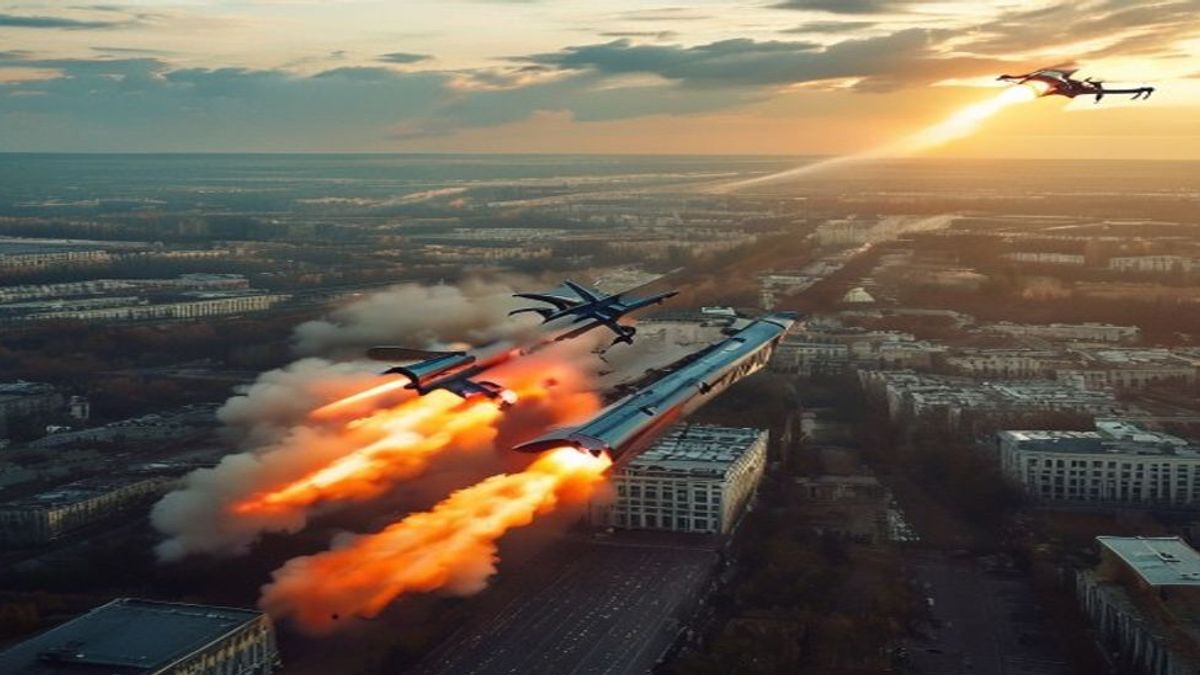
A blackened smudge tore across the afternoon sky over Kyiv, leaving trails of shattered glass and rising ash. Zelenskyy, from a secure command center, shrugged off the quiet nerves that followed the blast. “It was sharp, almost invisible,” he told reporters. The sound that followed was a siren’s final, frantic wail, echoing through the city’s hurried streets. But what struck first was the sudden silence, then the unsteady tremors that started at the heart of the capital. Truth is, the missile didn’t linger; it disappeared faster than the drones that tangled above it.
Russia aimed its hypersonic Oreshnik at Kyiv amid a volley of drones and conventional rockets. Official Russian statements boast a new era of striking power, yet the reality for residents was a sudden plume of smoke thickening the morning haze. At least two civilians paid the price: a child and a grocery worker, according to local emergency reports. Meanwhile, Kyiv’s air defenses scrambled, but the Oreshnik’s speed and high altitude made interception a nearly impossible game of cat and mouse. Still, the attack reveals that Russian military planners are willing to employ advanced systems in direct target practice.
The Oreshnik isn’t a relic; it’s a hypersonic missile, propelling itself at five times the speed of sound. Its relatively low trajectory and ability to glide at high altitudes allow it to dodge most radar systems. And yet, it requires line‑of‑sight or a dedicated launch platform, meaning Russia has a willingness to commit pieces of its logistical chain directly over enemy airspace. For Ukraine, that means every new strike forces a recalibration of its anti‑missile protocols—shifting resources from flak batteries to missile‑range radar coverage. The real cost? A swath of infrastructure still under repair from earlier attacks is now under constant threat.
Diplomatically, the Oreshnik’s deployment carries weight. Allies in the West see a package of signals: Russia is on the brink of field