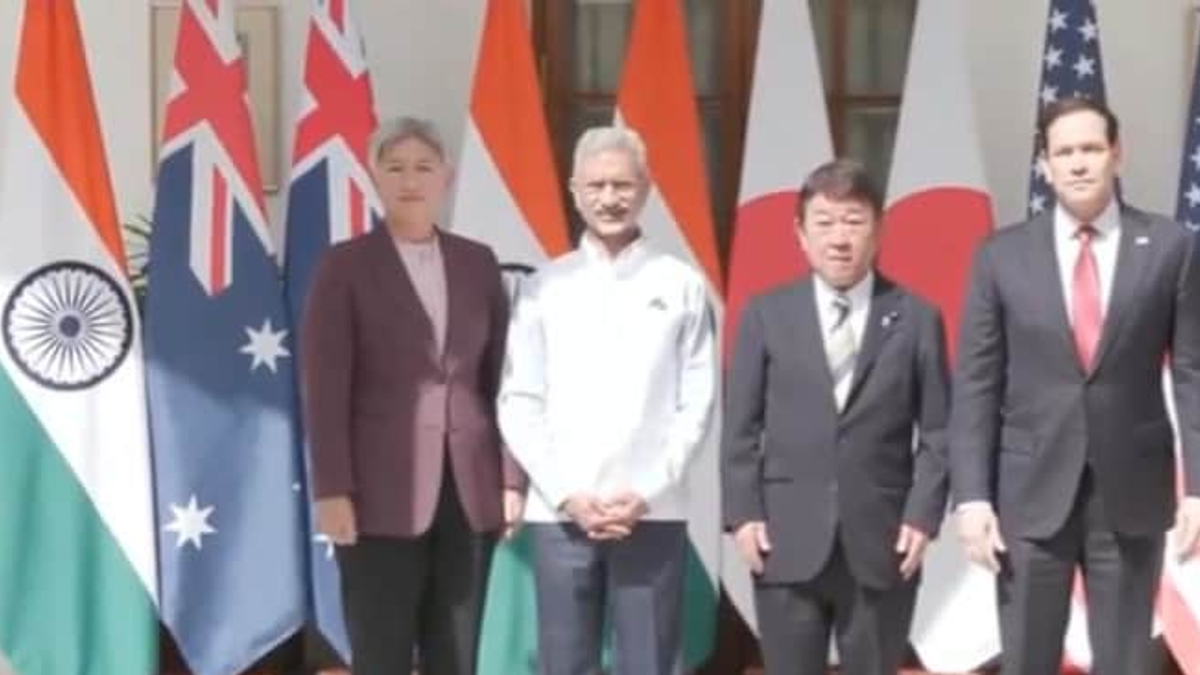
Rubio arrived. India greets him. A few minutes before noon, the U.N. auditorium in New Delhi—usually a quiet venue for treaty signings—erupted into a flurry of diplomatic chatter. All four flags—red, white, blue, and the distinctive flag of the Republic of India—flashed overhead, signalling a meeting that carries more weight than a handful of policy notes.
Jaishankar opened the session with a terse greeting. “Today we step beyond words,” he said. The external affairs minister’s tone was steady, hinting at the heft of the discussion ahead. He briefly highlighted the Quad’s history, a quartet formed over a decade ago to counter balance shifting powers. Then he pivoted to the present, underlining that this gathering could act as a real-time laboratory for policy swaps.
Rubio chimed in, his headline catchphrase echoing—“Free and Open Indo‑Pacific” is no longer a slogan, but a working hypothesis. He spoke first about maritime security. He noted the rise of high‑speed patrol ships and the looming risk of piracy in the Strait of Malacca. “We need joint naval drills,” he insisted. But here comes the ask: how do we sustain such cooperation when budgets tighten and political scars run deep?
Toshimitsu Motegi, Japan’s foreign minister, took the floor next. He leaned on technology, positing that the Quad could pioneer a shared cyber‑security framework. “Emerging tech isn’t just a tool,” he reminded, “it’s a battlefield.” His point sparked a dialogue on data sharing and collective defence of critical infrastructure—issues that overrun any traditional treaty’s scope.
Penny Wong from Australia counter‑balanced the conversation with a brief on disaster response. “Sundarban floods and Cyclone Yasa both highlighted gaps in real‑time coordination,” she said. She called for a joint early‑warning system that cuts across borders. “Listen, if we’re built to share,” she added, “the triage of resources can save lives before a catastrophe’s last roar.
Behind them, a sea of analysts murmured, their pens poised on laptops. The atmosphere was tense yet collaborative. This is where theory meets practice, a stage for the four powers to roll the future of the Indo‑Pacific into a single, actionable draft. Will this meeting ignite a first‑of‑its‑kind treaty, or will it sit as another diplomatic footnote?