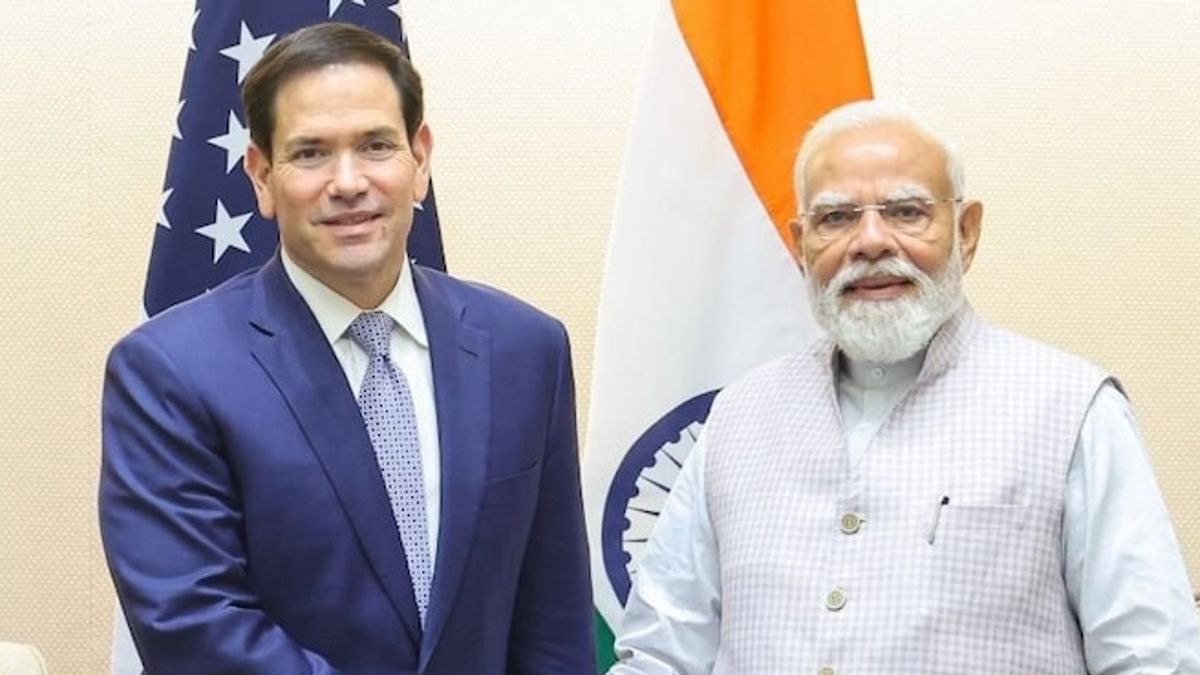
When Narendra Modi stepped into the presidential office building in New Delhi, he was met by Marco Rubio, who arrived with a suitcase full of agenda items and a conspiratory grin. “We need to talk security and trade,” Rubio had said earlier, and the two leaders struck a firm handshake that felt more like a prelude to negotiation than mere protocol.
They spent the day on a dense list of topics: tariffs on textiles, the allocation of rare earth minerals for defense platforms, and the movement of U.S. cargo through Indian ports. The session wasn’t just about dollars; it was about positioning in a world where a shifting energy board and a simmering Iran standoff are reshaping alliances. “This is a time when everything matters,” Modi noted on X, hinting at the weight of his voice in a room that had more than one truth.
Earlier, the U.S. had announced a “Trump 2.0” foreign policy that eyed India as a pivot against Beijing. Trade friction has only deepened, with India rebuking U.S. demands for greater market access while the U.S. protested Indian tariffs on solar panels. The energy debate—whether India should allow fossil‑fuel pipelines through its borders or push greener tech—echoes back to a past when the two countries were close allies at the World Trade Organization.
While the primary focus was trade, the meeting sketched a broader chessboard. The Indo‑Pacific region seeps with competition from China, whose economic clout is expanding through infrastructure spending across the Pacific rim. India, eager to maintain its stance as a counterbalance, was told that the U.S. remains willing to back its ambitions in maritime patrols and cyber defense. “We had a productive discussion on ways to deepen U.S‑India cooperation across security, trade, and critical technologies,” a U.S. envoy summed up, as if recapping a shared vision rather than acknowledging loopholes.
In a twist that rattled political circles, Rubio handed a formal invitation to Modi to visit the White House, sampling a ritual few leaders have ever performed. The gesture suggests a sign of goodwill—or a play for influence amid toxic trade negotiations. When the White House said “in the near future,” it sounded less like an offer and more a test of loyalty. Modi’s curt reply on his official page echoed a question that time will answer: will Iran's geopolitical storm push India to a sharper U.S. alliance?
What will the conversation look like at the White House? Will the U.S. finalise a trade package to unlock India’s tech exports? Or will the two sides trade promises and hands? Both leaders are ghosting a future that hinges on policy, pressure, and propaganda. The deeper the rift, the louder the call for concrete answers. Until then, the shared vision remains just that—shared.