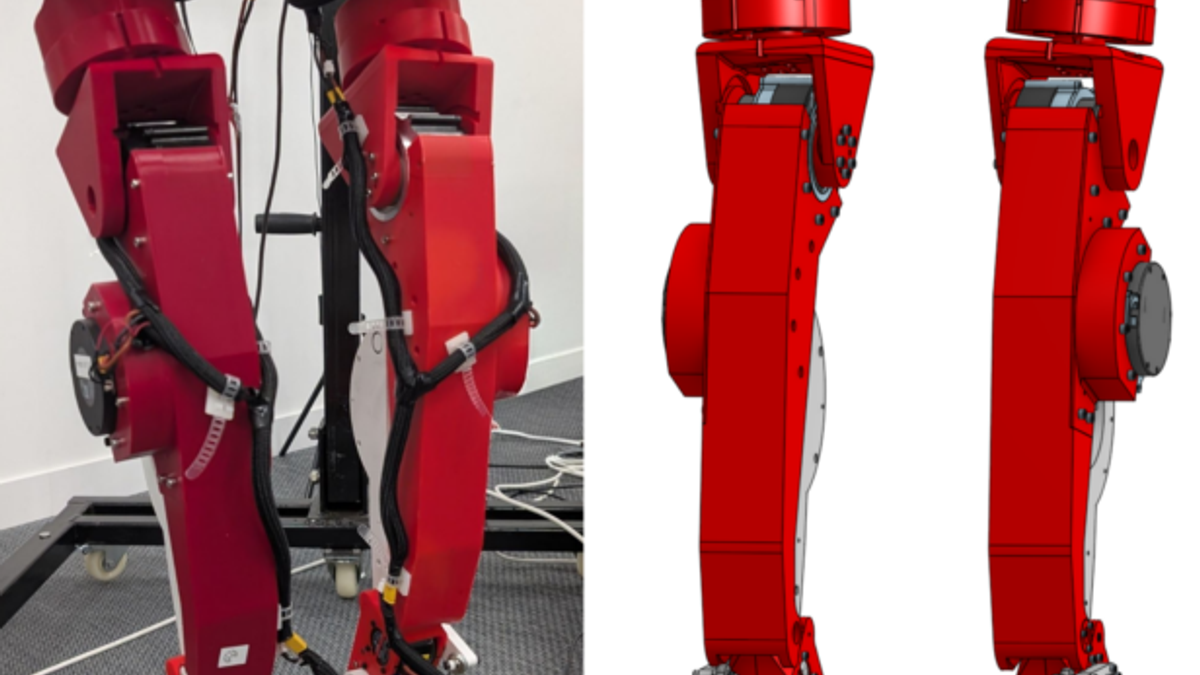
Hugging Face unveiled a $2,500 bipedal robot kit yesterday, and the buzz is already spreading across maker circles. The kit, called “Biped Labs,” pauses at the foot of a stainless‑steel frame and shoots out custom 3‑D‑printed leg modules that snap together with a few screws. “It’s the first time you can afford to really experiment with walking robotics,” an engineer from the team said. The goal? To let anyone build a two‑legged robot that feels less like a prototype and more like a test subject.
For years, walking robots have lived in the shadows of academia and defense contracts, costing hundreds of thousands of dollars to source each joint and motor. The landscape shifted in 2015 when a handful of open‑source projects shared code and designs, but those early kits were still pricey. Now, a factory‑made, pre‑wired chassis costs less than a laptop. But it’s not only the price that matters. The kit’s modularity makes swapping parts a breeze, letting researchers test different socket designs or motor controllers on the same body.
Inside the pack, you’ll find two low‑torque stepper drives, a set of miniature inclinometers, pressure sensors tucked into the kneecaps, and a tiny Raspberry Pi that runs open‑source gait‑planning software from Hugging Face’s AI hub. The software flexes with your experience: a novice can start with a pre‑built walking pattern, while a pro can tweak acceleration curves and balance controls via a simple Python API. The entire system is built around the same 3‑D‑printed legs, so you can swap a knee actuator for a stronger one without rebuilding the frame.
What this means for research is tantalizing. Gait analysis can now move beyond expensive lab suites into undisclosed labs, enabling academics in resource‑tight institutions to test myoelectric prosthetics, study locomotion in soft‑tissue models, or fine‑tune neural‑network controllers. In the biological sciences, the small, compliant feet could serve as low‑risk stepping stones for neuroprosthetic trials, giving patients a hint of reality before solid implants.
Yet it’s a double‑edged blade. While the kit unlocks high‑fidelity experiments, it also raises safety concerns. Rough or uneven terrain could lurch the lightweight robot, spinning it into an awkward tumble. Multiple users, especially in informal settings, might run into the “tread‑and‑test” culture that tends to overstep electrical safeguards. That said, the design team recommends grounding the chassis and issuing a set of safety guidelines with every kit.
Still, the most provocative thought lingers: if a roboticist can 3‑D‑print a leg for half the cost of a foot‑band Amputee, what does that mean for low‑income medical infrastructures? Do we see a generation of affordable, AI‑driven gait aids sprouting in communities that can only afford a consumer robot? The answer is as open‑ended as the code Hugging Face shared.