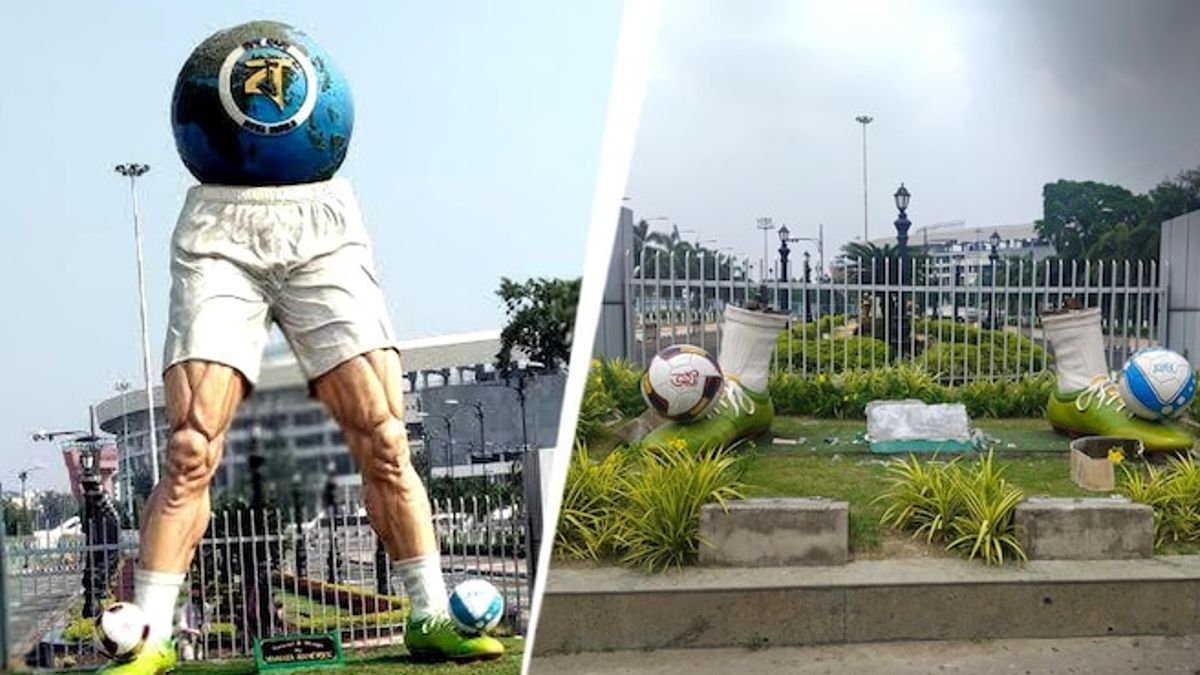
On Saturday, a crowd gathered at the VVIP gate of Salt Lake Stadium, the pulse of Kolkata’s football obsession, only to see a familiar silhouette collapse beneath the morning sun.
The 3‑meter bronze figure—two legs amputated at the torsos, a football clutched above—was the brainchild of former Chief Minister Mamata Banerjee, carved into the stadium’s forecourt ahead of the 2017 FIFA U-17 World Cup. That year, the venue hosted young talents and stood as a beacon of regional pride.
Its design, labeled "Biswa Bangla" in bold lettering, blended athletic vigor with a political manifesto. Critics, however, called it an eyesore, a grotesque tableau that flouted traditional aesthetics. Whether they loved it or loathed it, the statue had become a badge of identity, flanked by the roar of East Bengal and Mohun Bagan fans on derby nights.
The BJP-led state government proclaimed, "We will dismantle symbols that sully the city’s image." Minister Nisith Pramanik, whose pledge came weeks ago, watched the demolition silently. Phones buzzed as workers unbolted the piece, and the statute's jagged limbs crumbled into dust, a symbolic gesture or a political statement? Truth is, the act punctuates the clashing ideologies that shape local politics.
Meanwhile, football purists raise concerns. Some argue that the statue forged a new mythos for the stadium, a living symbol of the region’s ambition. Others say the mash‑up of political iconography and sport muddled the venue’s purpose. Still, the absence of the figure leaves a void both literal and figurative on the stadium’s steps.
Is the removal a victory for aesthetics, or a setback for a political legacy? The cricketing world, looking beyond the field, wonders whether this act sets a precedent for how governments treat civic art. The stadium’s walls now whisper a different story—one that may or may not echo in future matches. In a city that loves its game, will history remember the shape hollowed beneath the stadium lights?