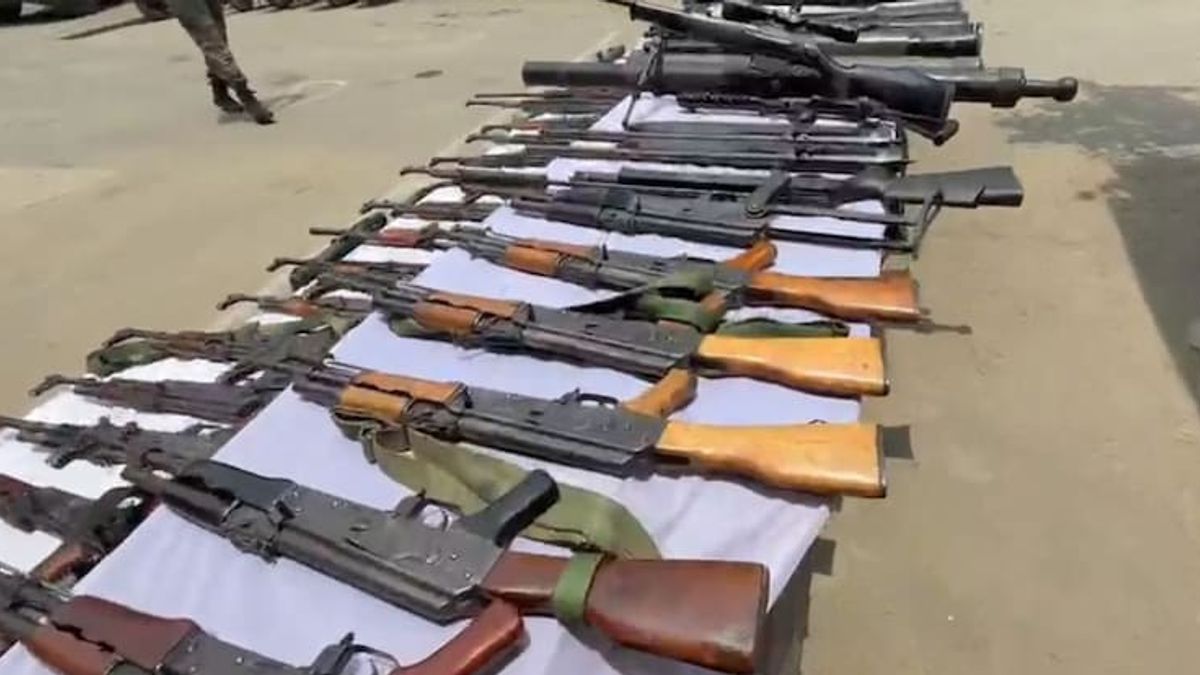
Eight thousand peers slide into Riyadh. Their boots echo against concrete. They hold a promise, not a gun. The move came straight from Islamabad’s command center, where minutes turned into a shipment of armored trucks and the roar of engines. The squadron of JF‑17 fighters, the product of a joint Pakistani‑Chinese partnership, has already begun rehearsals in the kingdom’s skies.
Meanwhile, the fleet has brought home a Chinese HQ‑9 air‑defence system. A quartet of radar suites glows like sentries on each platform. The system can track swarms of drones and lock on hostile jets—a tangible counter to threats that could come from any direction. The deployment is not a show‑off; it’s a combat‑ready brigade.
Truth is, the agreement that brokered this move remains hush‑hush. Signed a year earlier, the contract calls for each side to answer the other’s call in case of attack. Defending is part of the pact, written in pages that remain out of public view. Yet, inside the briefing rooms, officials see it as a lifeline to Saudi Arabia.
Though the foreign office stayed silent, the defence minister said the deal places Saudi under Pakistan’s nuclear umbrella. Some analysts argue the wording signals a power shift: a quiet reminder that Pakistan can back Saudi with down‑range firepower. Others caution that the promise may be symbolic, a diplomatic bridge more than hard power.
In the backdrop, Islamabad serves as the sole mediator between the U.S. and Iran. The two superpowers have waged a proxy war, with Saudi forces often catching the crossfire. Pakistan’s new forward presence arguably signals a deeper stake in the outcome. It also hints at a recalibration of alliances in a region that never rests.
Still, the eyes of the world rest on how Saudi will use this new muscle. Will the addition of four JF‑17s and a full air‑defence system tip the scales in an arena where every missile and drone counts? And if so, what will that do to the