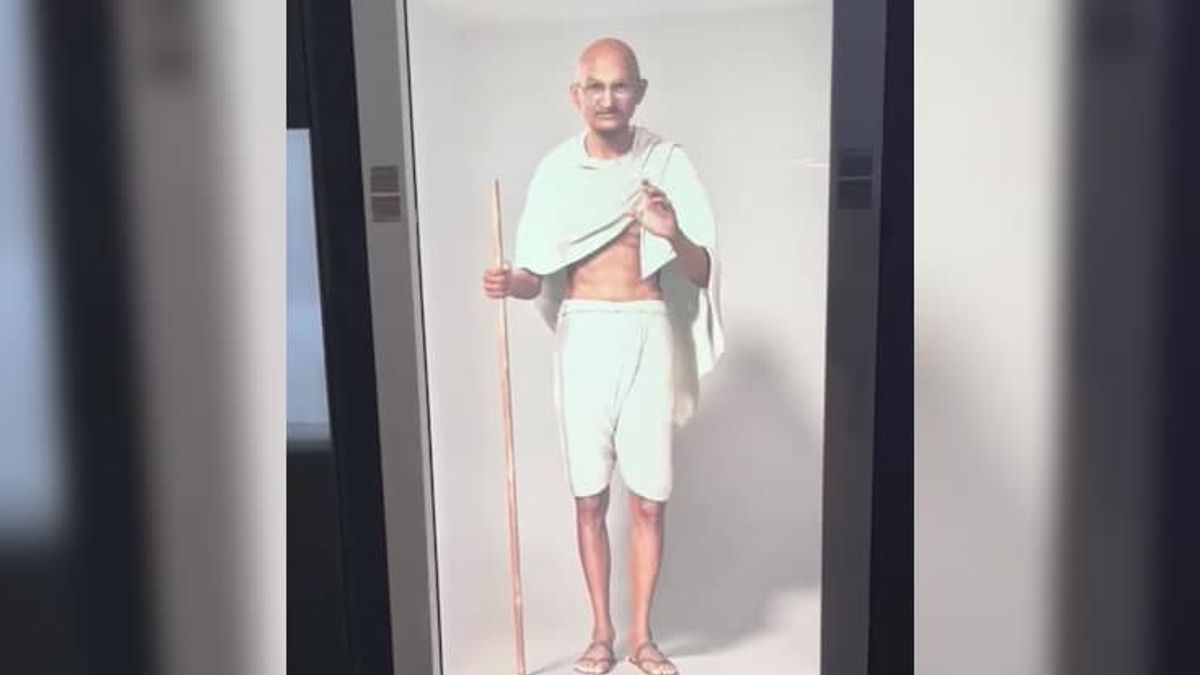
A silver‑glinting hologram of Mahatma Gandhi flickered into view at the Prime Ministers' Museum, and tourists froze, ready to ask. The device, dubbed a Holobox, resembles the towering leader in salt‑washed robes and silvered skin, and it stands exactly 1.8 meters tall—just like the man himself.
NDTV reporters stood beside the avatar, typing questions about modern governance. The avatar replied, voice steady, as if the talk were happening in a quiet ashram. Visitors swore they heard Gandhi’s calm lilt and felt the weight of his resolve in each syllable. In a moment that felt almost cinematic, a crowd filled with history buffs leaned in, curious to see how a digital muse would answer the mysteries of India’s freedom struggle.
The project mixes artificial intelligence, voice‑recognition engines, and a library of archival footage. Engineers fed the system thousands of speeches, interviews, and writings—everything from the “Hunger Strikes” to the “Quit India” manifesto. Algorithms sift through context and tone, matching the query to the appropriate script while controlling the avatar’s facial expressions in subtle, human‑like ways. The result is a conversation that feels natural enough to trick onlookers into thinking they’re talking to a living scholar.
Training such a system was tough. The team had to map Gandhi’s voice across over a hundred years of debate on subjects that range from irrigation policy to the ethics of non‑violence. When questions touch on poorly documented areas, the AI can still produce a coherent answer, but it relies on educated guesswork rooted in his documented attitudes. Misra, the museum’s chairperson, said the project demanded a “mind‑set of continuous inquiry” to keep the hologram relevant and authentic.
More than a gimmick, the Holobox could reshape how students study history. Instead of flipping through dusty volumes, they can engage directly with primary source material. The experience also invites public debate: would a recorded Gandhi provide a voice to new social movements, or could it twist his legacy for political ends? By allowing people to pose skeptical questions and receive instant answers, the museum offers a new platform for critical engagement. This isn’t just a trick of lights and code; it’s the first time an iconic figure can be summoned for direct dialogue in today’s digital age.
What will the next generation of historians say about the nature of memory when a synthetic Gandhi can answer on demand? And will the Holobox spark a wave of other holographic leaders, or will it prompt a quiet salute to living history? The one thing is clear: the past is no longer static, and it is speaking back at a speed we never imagined.